EN
What Are Common PAM Applications in Industry?
2026/11/18
Discover diverse polyacrylamide applications in industry to optimize paper machines, accelerate sugar clarification, and improve concrete rheology.
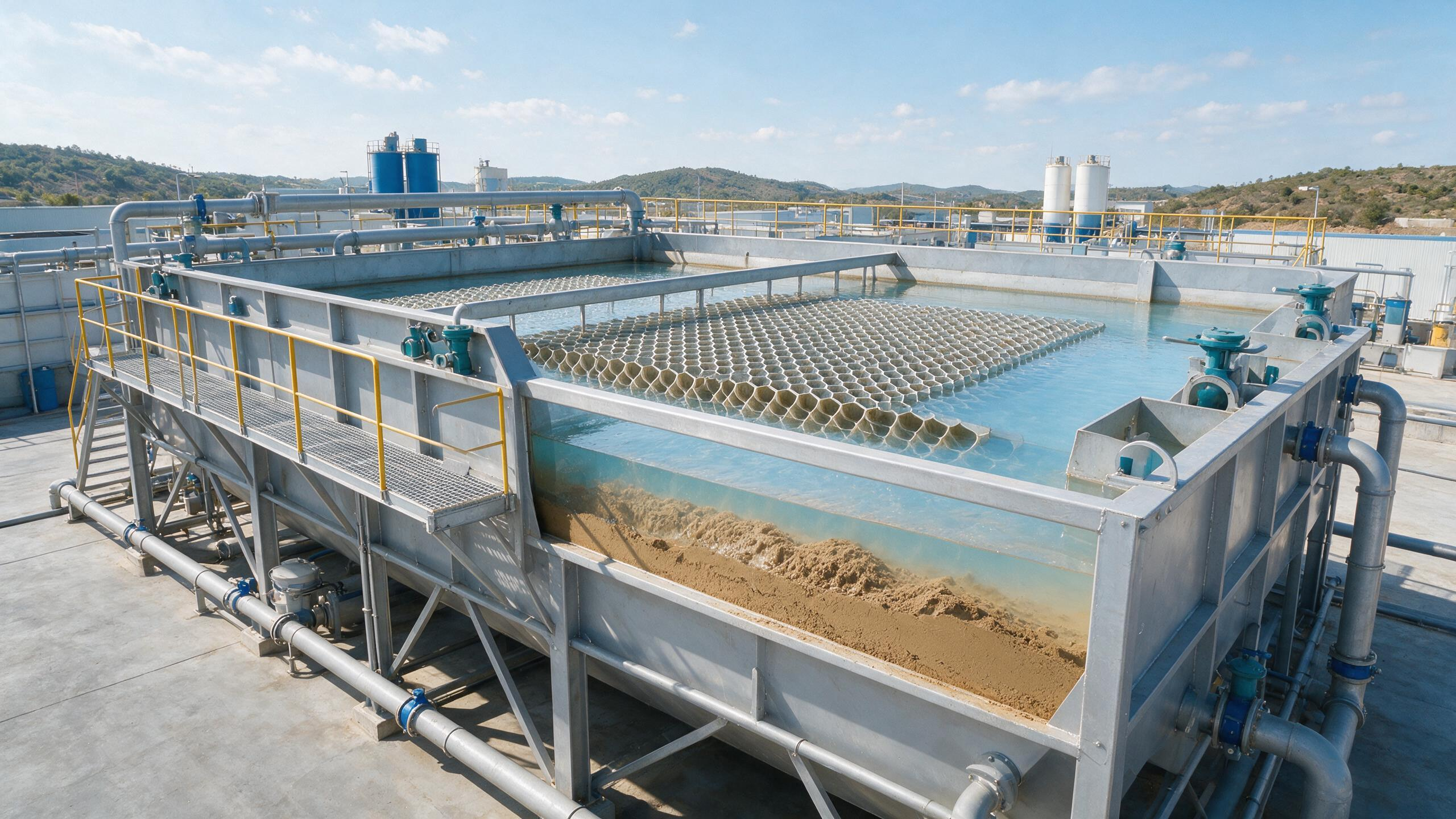
Industrial fluid streams generated across aggregate washing, coal preparation, and river dredging carry substantial concentrations of fine inorganic silt and clay particulates. When particle diameters drop below ten microns, thermal Brownian motion and surface hydration layers completely override natural gravitational pull. Left untreated inside settling ponds, these dispersed mineral fines exhibit terminal velocities measured in millimeters per day, keeping industrial process water permanently turbid. Overcoming this thermodynamic suspension barrier is precisely why deploying an anionic polymer becomes indispensable for high-throughput sedimentation processes. Synthesized through the controlled copolymerization of acrylamide and sodium acrylate, an anionic polymer carries negatively charged carboxylate groups spaced strategically along its carbon backbone. When introduced into neutral or slightly alkaline waters containing divalent cations like calcium and magnesium, these negative polymer sites utilize dissolved metal ions as electrostatic bridges to latch onto negatively charged clay and silica surfaces. This divalent cation bridging neutralizes kinetic stability and triggers immediate particle aggregation. Without chemical conditioning, fine suspended solids pass straight through clarification tanks, eroding pump impellers and clogging spray nozzles. Initiating rapid particle settling through molecular bridging transforms unmanageable colloidal suspensions into fast-clearing aqueous systems.
The physical efficiency of macromolecular bridging depends heavily on how thoroughly polymer chains uncoil inside the aqueous medium. Once dissolved at working concentrations between zero point one and zero point three percent, the ionized carboxylate groups along the anionic polymer backbone repel each other electrostatically. This internal charge repulsion forces the coiled macromolecule to straighten out, expanding its hydrodynamic radius across several microns of liquid space. An extended molecular architecture provides thousands of active adsorption sites capable of capturing dispersed suspended solids across wide inter-particle gaps. During the sedimentation process, a single elongated polymer strand tethers dozens of pre-destabilized silt particles into a unified, three-dimensional floc network. Achieving optimal bridging requires keeping surface adsorption coverage near fifty percent, leaving sufficient unoccupied surface area on adjacent particles for polymer tails to attach. If plant operators inject excessive chemical doses, complete surface saturation occurs, triggering steric stabilization that halts particle settling entirely. Selecting a customized anionic polymer with a hydrolysis degree between twenty and thirty-five mole percent ensures maximum chain extension across neutral pH industrial waters, maximizing capture efficiency and eliminating chemical waste.
Modern industrial plants increasingly replace sprawling outdoor settling basins with compact inclined plate settler units, commonly known as Lamella clarifiers. While inclined plates multiply effective settling surface area within a minimal footprint, their narrow flow channels create steep hydraulic velocity gradients that challenge fragile chemical flocs. Standard inorganic coagulants produce fluffy, low-density hydroxide precipitates that shear apart when entering inclined plate packs, leading to severe solids carryover at the overflow weir. Introducing a high-molecular-weight anionic polymer fundamentally alters the structural density and mechanical resilience of settling aggregates. The flexible carbon-carbon backbone absorbs hydrodynamic stress while pulling captured suspended solids into compact, spherical pellets with high specific gravity. Inside Lamella clarifiers, conditioning slurries with an engineered anionic polymer permits operators to boost hydraulic surface loading rates from one point two meters per hour up to eight point five meters per hour without experiencing floc washout. Furthermore, dense polymer-bound aggregates slide smoothly down sixty-degree inclined plates rather than sticking to plastic surfaces, preventing mud accumulation and structural collapse inside high-rate clarifier modules.
Inside industrial sedimentation tanks, solid-liquid separation progresses through four distinct hydrodynamic regimes: discrete free settling, flocculent aggregation, hindered zone settling, and bottom compression. Unconditioned slurries linger indefinitely in the dispersed phase, failing to form a distinct boundary between clear supernatant and settling mud. Dosing an active anionic polymer accelerates the transition straight into hindered zone settling, where interlocked macro-flocs descend as a unified blanket with a sharp, visible liquid-solid interface. Process engineers evaluate this sedimentation process by tracking the zone settling velocity inside graduated test cylinders. High-performance polymers create open interstitial drainage channels within the descending mud blanket, allowing displaced water to escape upward with minimal hydraulic friction. As the solids reach the bottom compression zone, the weight of overlying particulates squeezes residual bound moisture out of the floc matrix. Accelerating particle settling through zone compression raises underflow solids concentrations by fifteen to twenty-five percentage points while maintaining overflow turbidity below five nephelometric turbidity units. Consistently controlling suspended solids across both overflow and underflow streams stabilizes downstream belt presses and centrifugal decanters.
Field performance data from an industrial silica sand washing plant illustrates the direct financial impact of engineered sedimentation programs. A high-capacity aggregate facility processing three hundred metric tons of crushed quartz sand per hour generated vast volumes of clay-laden wash water containing eighteen percent suspended solids. The existing gravity settling pond required forty-eight hours of retention time to clarify water sufficiently for recycling, creating a massive water bottleneck that restricted daily plant operating hours. Technical specialists audited the wash water chemistry and replaced the plant's generic coagulant with an eighteen-million-Dalton anionic polymer featuring a twenty-eight percent degree of hydrolysis. Installed with an automated inline static mixer ahead of a radial flow clarifier, the new anionic polymer induced instantaneous macro-flocculation. Zone particle settling velocity jumped from zero point four meters per hour to eleven point two meters per hour, cutting required hydraulic retention time down to just thirty-five minutes. Clarified water recovery reached ninety-two percent with suspended solids consistently under fifteen milligrams per liter. This rapid sedimentation process eliminated pond dredging expenses and saved the facility over one hundred and ninety thousand dollars annually in fresh water procurement and downtime costs.
Maintaining predictable settling kinetics across variable industrial slurries demands chemical additives with uniform molecular weight distributions and rapid dissolution profiles. Poorly manufactured polymers suffer from wide hydrolysis deviations and insoluble gel fractions that plug dosing lines and destabilize clarifier blankets. Feymer specializes in the precision synthesis of ultra-high-molecular-weight anionic polymer powders and inverse emulsions tailored for heavy-duty industrial sedimentation processes. Operating three advanced manufacturing bases and holding more than nine thousand metric tons of ready stock, Feymer guarantees uninterrupted chemical logistics to industrial operations across forty countries worldwide. Backed by SSE STAR Market public governance, EcoVadis Gold sustainability credentials, and ISO 9001 quality systems, every batch undergoes rigorous viscosity and settling velocity verification prior to shipment. Feymer application engineers work directly with plant operators to execute water chemistry audits, optimize dosing geometries, and accelerate particle settling across complex water recovery circuits. Partnering with Feymer provides industrial facilities with dependable polymer technology that maximizes clarifier throughput, eliminates regulatory discharge risks, and lowers total water treatment costs.
2026/11/18
Discover diverse polyacrylamide applications in industry to optimize paper machines, accelerate sugar clarification, and improve concrete rheology.
2026/11/16
Explore how advanced oilfield chemicals maximize enhanced recovery via high-stability polymer flooding, viscoelastic sweep, and efficient friction reducers.
2026/11/12
Learn how coagulant remove impurities in water by neutralizing colloid charges, de-emulsifying oily waste, and minimizing chemical sludge.
2026/11/10
Discover how advanced water treatment chemicals optimize primary clarification, prevent cooling tower scaling, and minimize industrial chemical sludge.
2026/10/19
Discover the benefits of using flocculant in sewage plants to stabilize the secondary clarifier, prevent sludge bulking, and boost phosphorus removal.