The Crucial Role of PAM in Modern Mineral Tailings Management
Mineral processing operations generate vast quantities of tailings, which are the byproduct of extracting valuable minerals from crushed ore. Managing these complex tailings is one of the most significant environmental and operational challenges facing the global mining industry today. Anionic PAM, or Polyacrylamide, has effectively emerged as the industry standard for optimizing this critical process. PAM functions as a high-efficiency flocculant that promotes the rapid settling of fine mineral particles from industrial suspension. By effectively neutralizing surface charges and bridging particles together into larger, denser flocs, PAM significantly accelerates the solid-liquid separation process. In large-scale mining operations, where water recycling, resource conservation, and space management are critical, the consistent application of high-quality PAM is essential for maintaining throughput, ensuring safety, and minimizing the environmental footprint of tailings dams.
Understanding the Advanced Chemical Mechanism of High-Performance PAM
The performance of PAM in sedimentation is fundamentally linked to its specific molecular weight and anionic charge density. Anionic PAM contains negatively charged functional groups along its long polymer chain, which interact with mineral surfaces to create strong, stable, and shear-resistant flocs. When introduced into tailings slurry, the long-chain structure of PAM physically captures the suspended fine particles, pulling them together through a process known as inter-particle bridging. This mechanism is far more robust than that of traditional inorganic coagulants, as it requires much lower dosage levels to achieve clearer process water. Feymer specializes in developing highly tailored PAM formulations that provide maximum floc size and fast settling velocity across diverse mineral compositions. This scientific precision ensures that mining engineers can manage slurry density more effectively, reducing the total volume of tailings requiring storage while simultaneously increasing the volume of high-quality recycled process water available for reuse in the mill.
Optimizing Sedimentation Efficiency in Dynamic Mining Operations
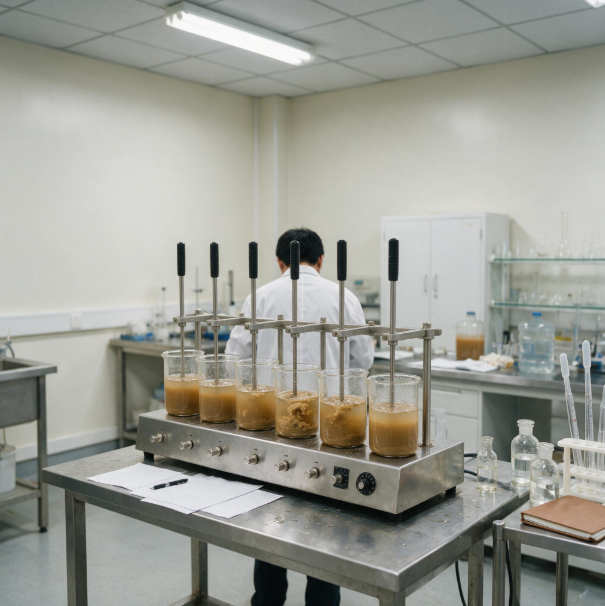
Mining facilities often face varying and unpredictable slurry conditions, such as fluctuations in mineralogy, high water salinity, and significant variations in pH levels. The inherent versatility of anionic PAM makes it highly adaptable to these constantly changing site conditions. In actual field applications, site engineers often find that the specific choice of PAM directly dictates the overall speed of the thickener discharge and the efficiency of the entire circuit. When optimized correctly through laboratory testing and site-specific trials, PAM allows for a higher underflow density, which is absolutely critical for the long-term structural stability of tailings storage facilities. Extensive field data indicates that switching to a high-grade, tailor-made anionic PAM can reduce the total settling time by as much as 30% in high-clay tailings applications. This gain in operational efficiency not only translates into higher industrial throughput but also significantly lowers energy consumption related to tailings pumping and water reclamation systems.
Environmental Impact and Global Sustainability Goals
Sustainability is no longer an optional target for the global mining sector; it is a core business requirement for operational viability. Tailings management with anionic PAM directly supports these goals by maximizing water recovery and minimizing the need for large-scale, potentially hazardous tailings dams. Effective flocculation reduces the amount of suspended solids in the plant effluent, ensuring that water returning to the mining process meets strict quality and environmental standards. Furthermore, using a concentrated, high-performance PAM minimizes the overall chemical demand of the plant, reducing the logistics and transportation carbon footprint associated with chemical procurement. By integrating efficient, modern flocculation practices, mining operations can demonstrate a proactive, long-term commitment to environmental stewardship, which is vital for securing social licenses to operate in increasingly sensitive and regulated ecological regions around the world.
Selecting the Right Technical Partner for Tailings Flocculation
The effectiveness of any comprehensive tailings management program relies heavily on the reliability and consistency of the chemical supply chain. Feymer has established an international reputation for excellence in the production of high-performance PAM and specialized flocculants designed for the most demanding mining environments globally. By offering deep technical insight into slurry chemistry, reagent interaction, and supply chain stability, the organization provides much more than just raw materials; it provides essential, data-driven process optimization solutions. With advanced, state-of-the-art manufacturing capabilities and a rigid commitment to stringent quality control, Feymer ensures that every batch of PAM delivers the structural performance required to handle complex mineral tailings. This partnership approach empowers mining operations to achieve greater operational stability, lower total costs, and enhanced environmental compliance in even the most challenging climates.
Future Trends in Global Mineral Tailings Management
As mineral deposits become lower in grade and more difficult to process, the reliance on advanced chemical solutions will continue to intensify. Future trends point toward more automated, real-time dosage systems coupled with increasingly specialized PAM formulations designed for specific mineral types, such as gold, coal, or iron ore extraction. The global shift toward "dry stack" tailings and more intensive, closed-loop water recycling systems will make the role of high-molecular-weight anionic PAM even more critical in the coming decade. Mining companies that invest in high-performance, proven flocculation technologies today are positioning themselves to lead the industry in both efficiency and environmental sustainability. The continuous, rigorous innovation in PAM production, supported by organizations like Feymer, will remain the heartbeat of safe, productive, and responsible mineral processing for years to come.

 EN
EN